Week 9
Learning Journey
This week we went on a learning journey to the ArtScience Museum! I knew I would enjoy the visit, but I didn’t expect to gain as much insight as I did in relation to my topic. Here are my observations, takeaways, and themes I was especially interested in from the exhibit.
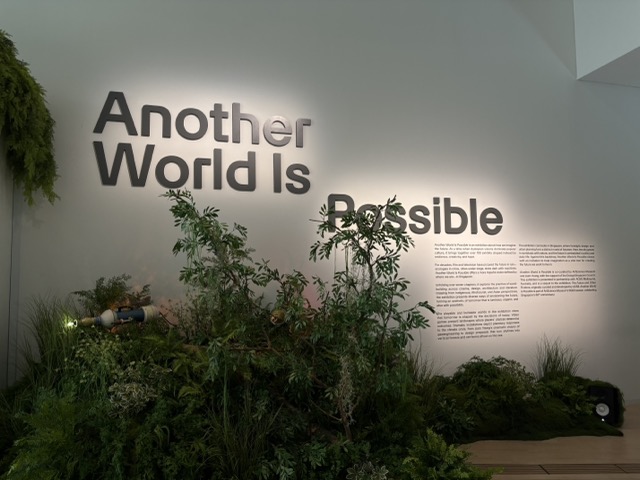
Another World is Possible Introduction
One of the first themes explored was how worldbuilding affects the future. The exhibit challenged the idea that the future moves only in one direction and highlighted how dystopian narratives often depict the future as bleak, with very little greenery and an overwhelming sense of AI takeover.
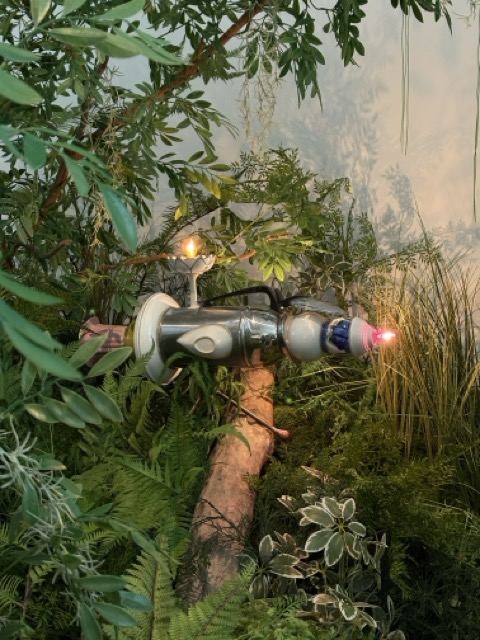
This section explored the
relationship
between the old and the new. The works used porcelain objects associated with
Chinese heritage
and
turned them into futuristic spaceship forms.
The pieces questioned how memory and
time
influence the way we build heritage while looking towards the future. There was a
balance of nostalgia and innovation that raised the question of how we can preserve
tradition while imagining new worlds.
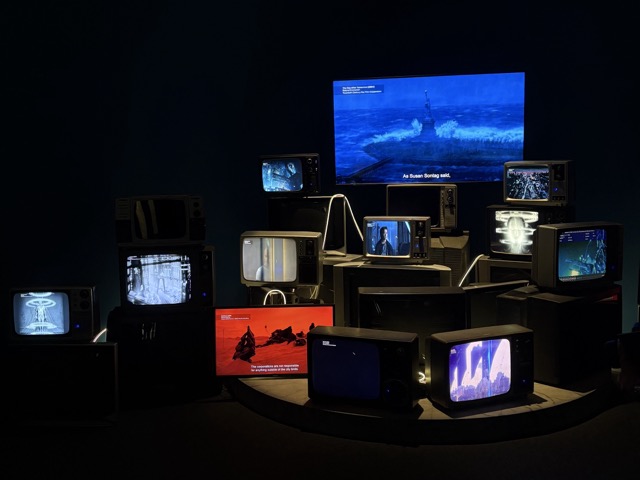
The Future Through Films & Games
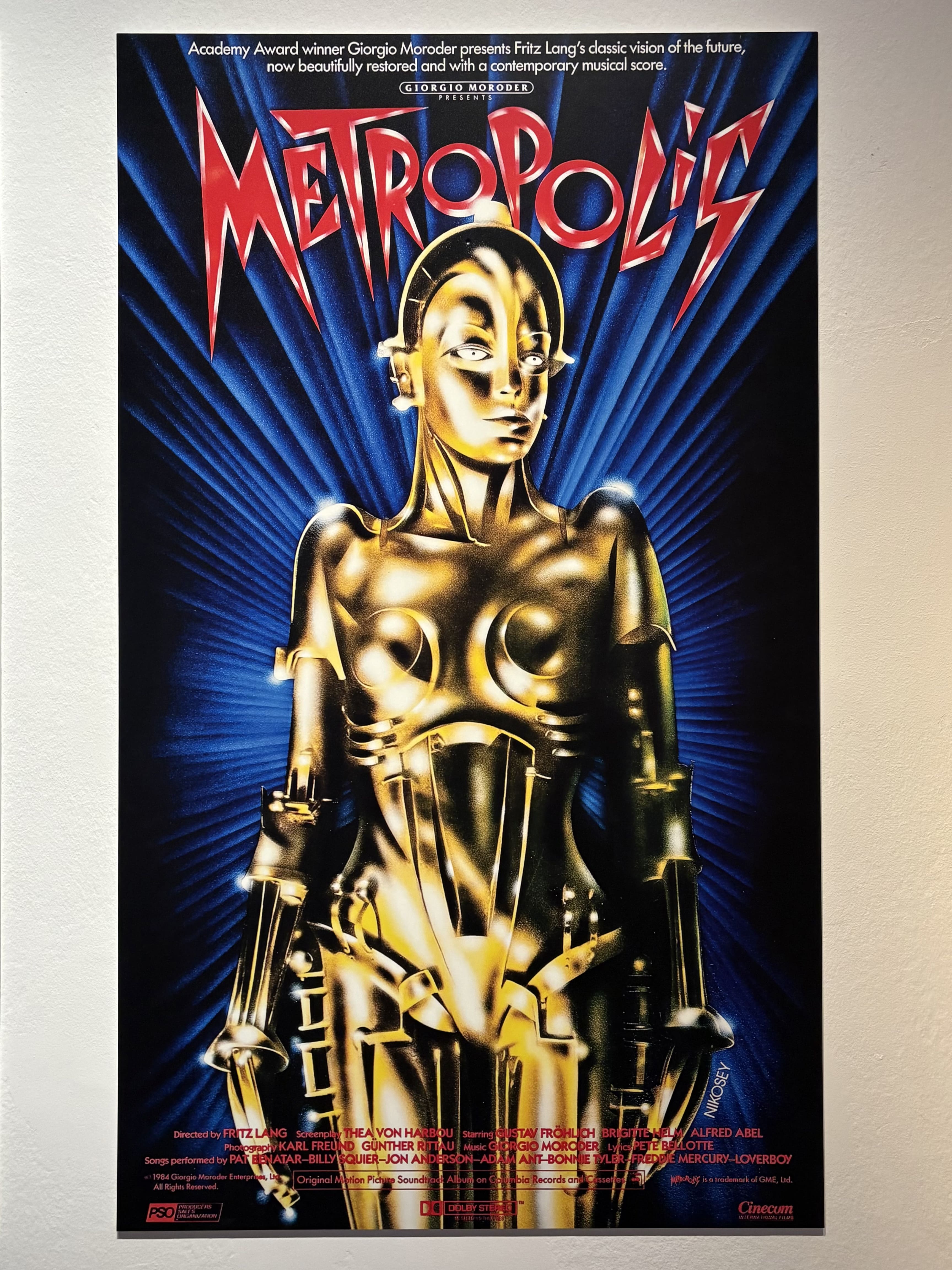
The second room focused on dystopian films and questioned why we are so obsessed with cyberpunk and run-down narratives. The exhibit suggested that these stories reflect a desire to rebel against oppressive systems in search of freedom and autonomy.
Liam Young
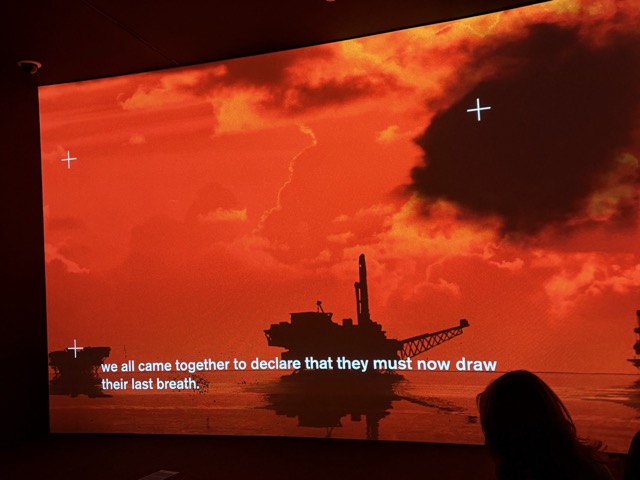
The third room featured work by Liam Young and explored the idea of reclaiming barren Australian landscapes. The exhibit showed how oil rigs could be transformed into space shuttles and highlighted struggles of power, national landscapes, and who these spaces belong to.
Tamil Futures
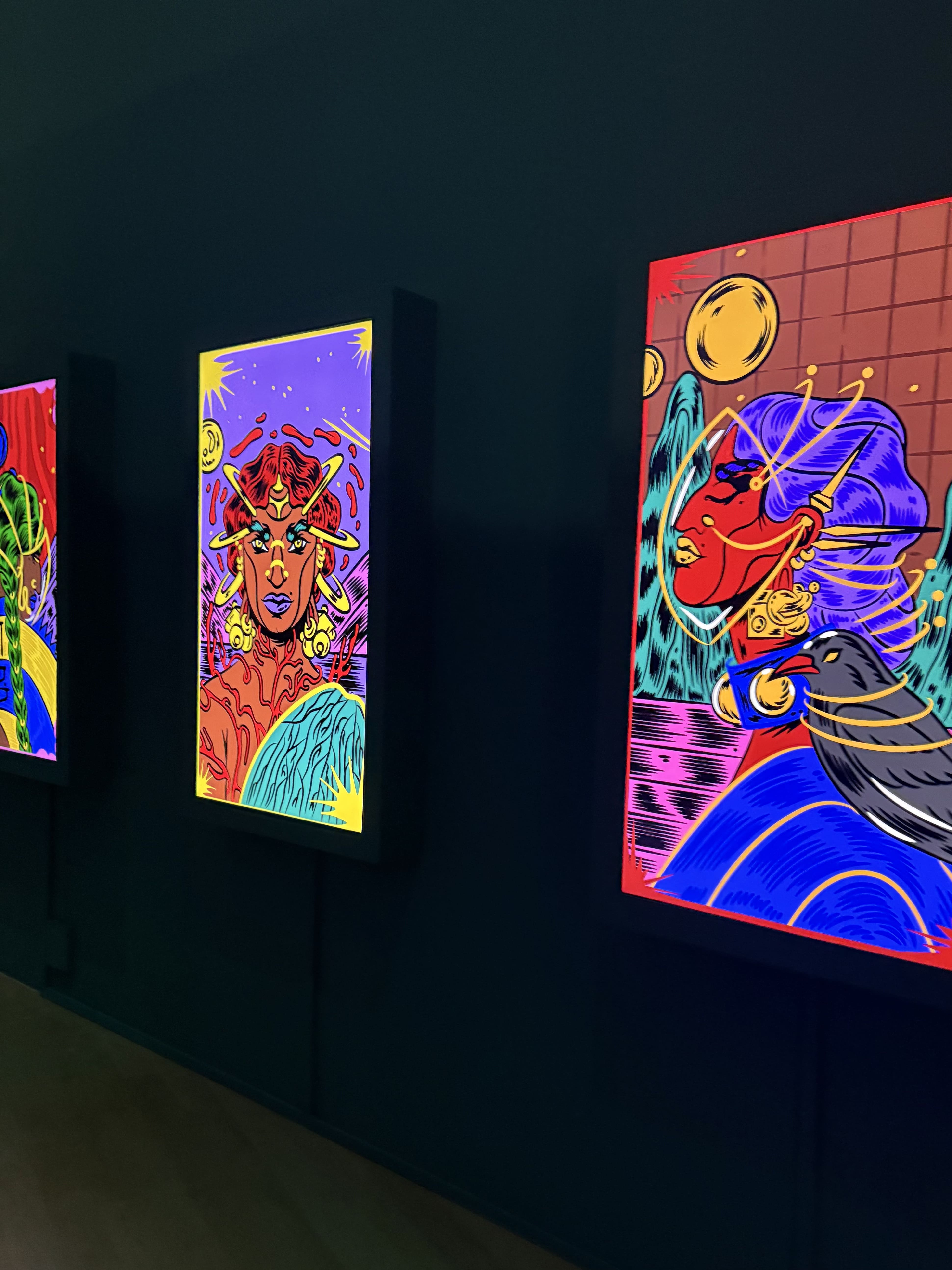
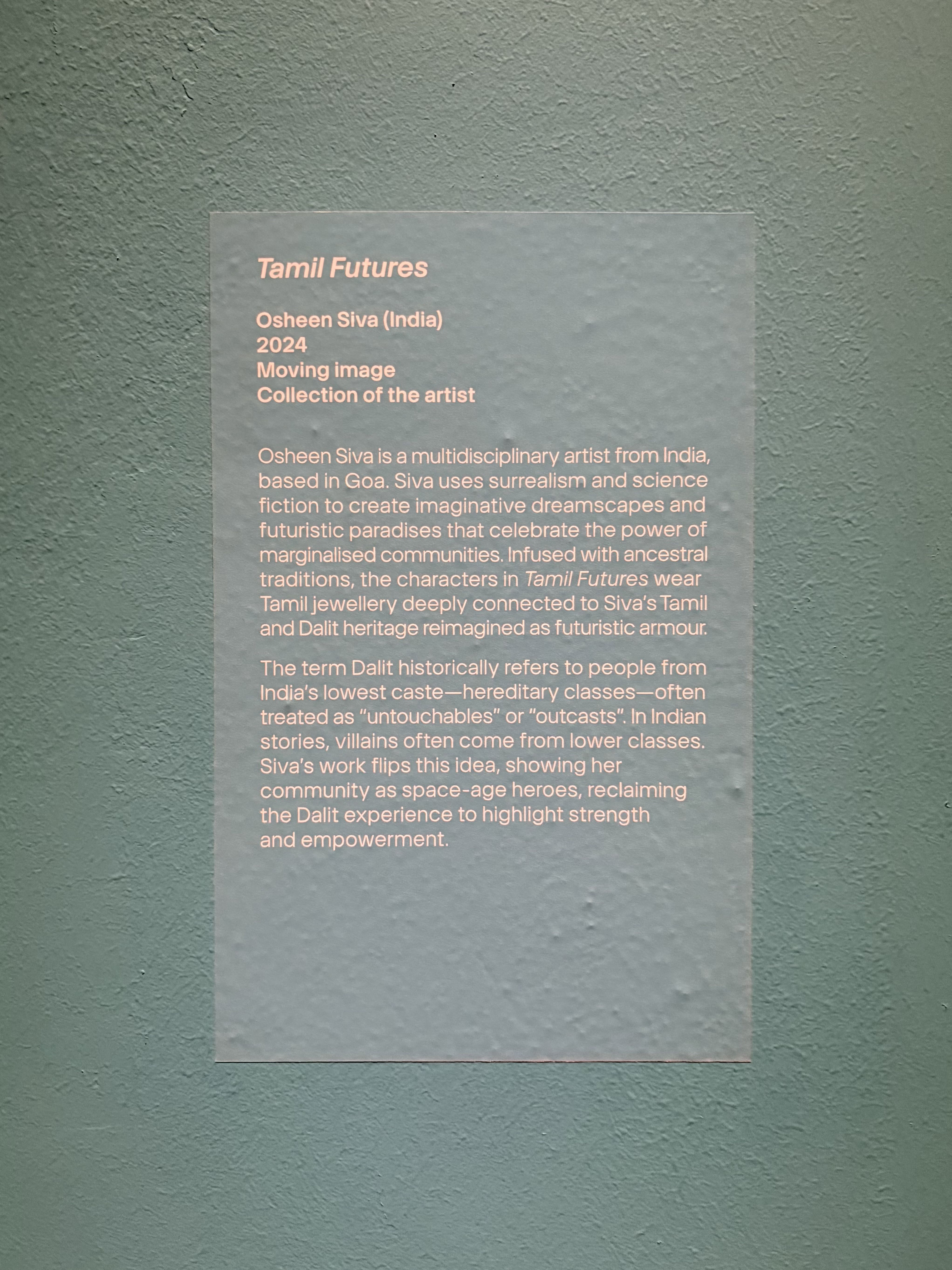
The hallway reimagined female warriors as space travellers, incorporating Tamil heritage. The exhibit referenced Dalit futurism, exploring what the future might look like for marginalised people. In many Western contexts, space travel is seen as a symbol of societal advancement, and this installation highlighted the importance of reclaiming these narratives by giving power back to the people whose voices are often unheard.
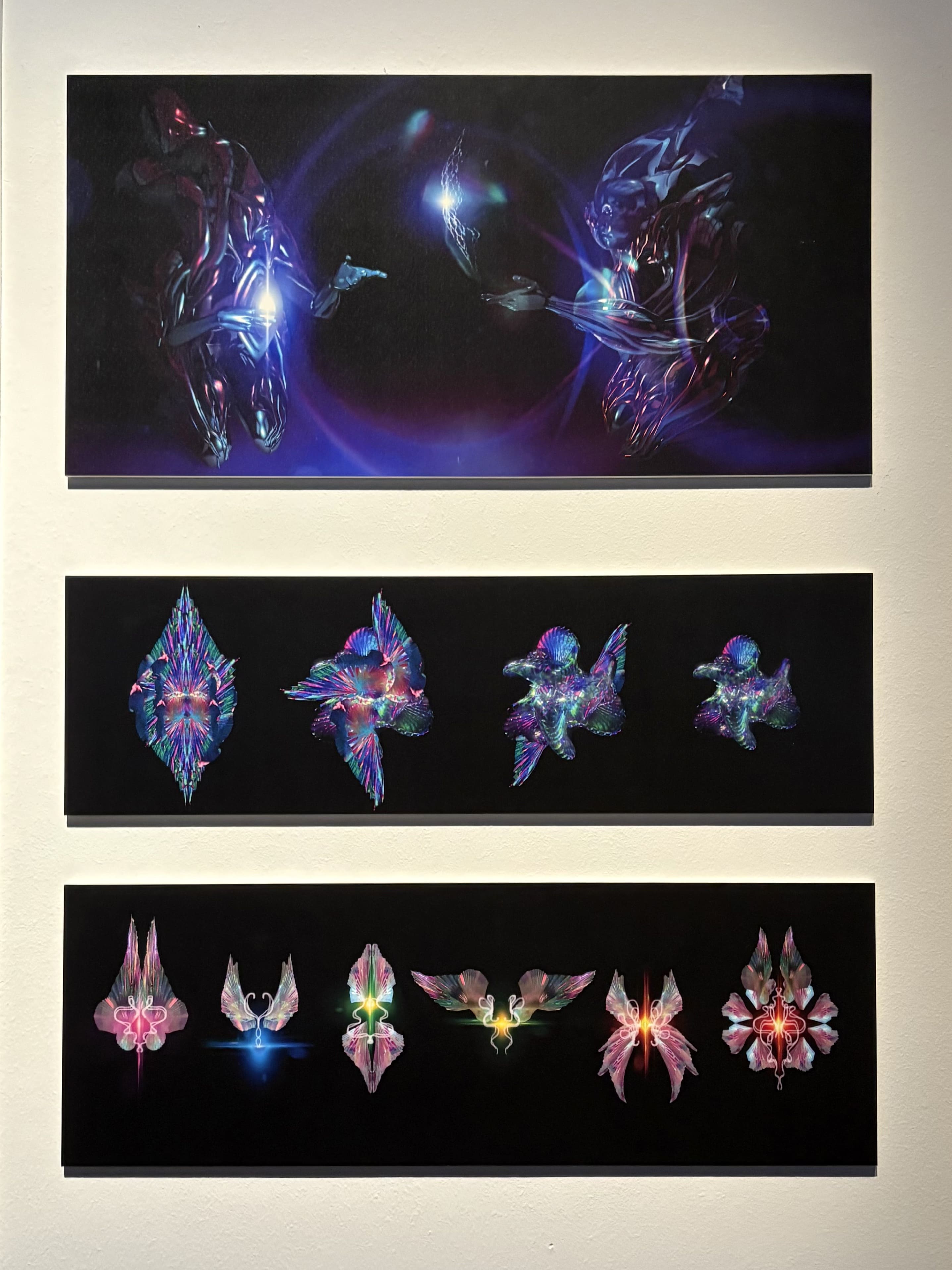
Integrating Tech and Nature
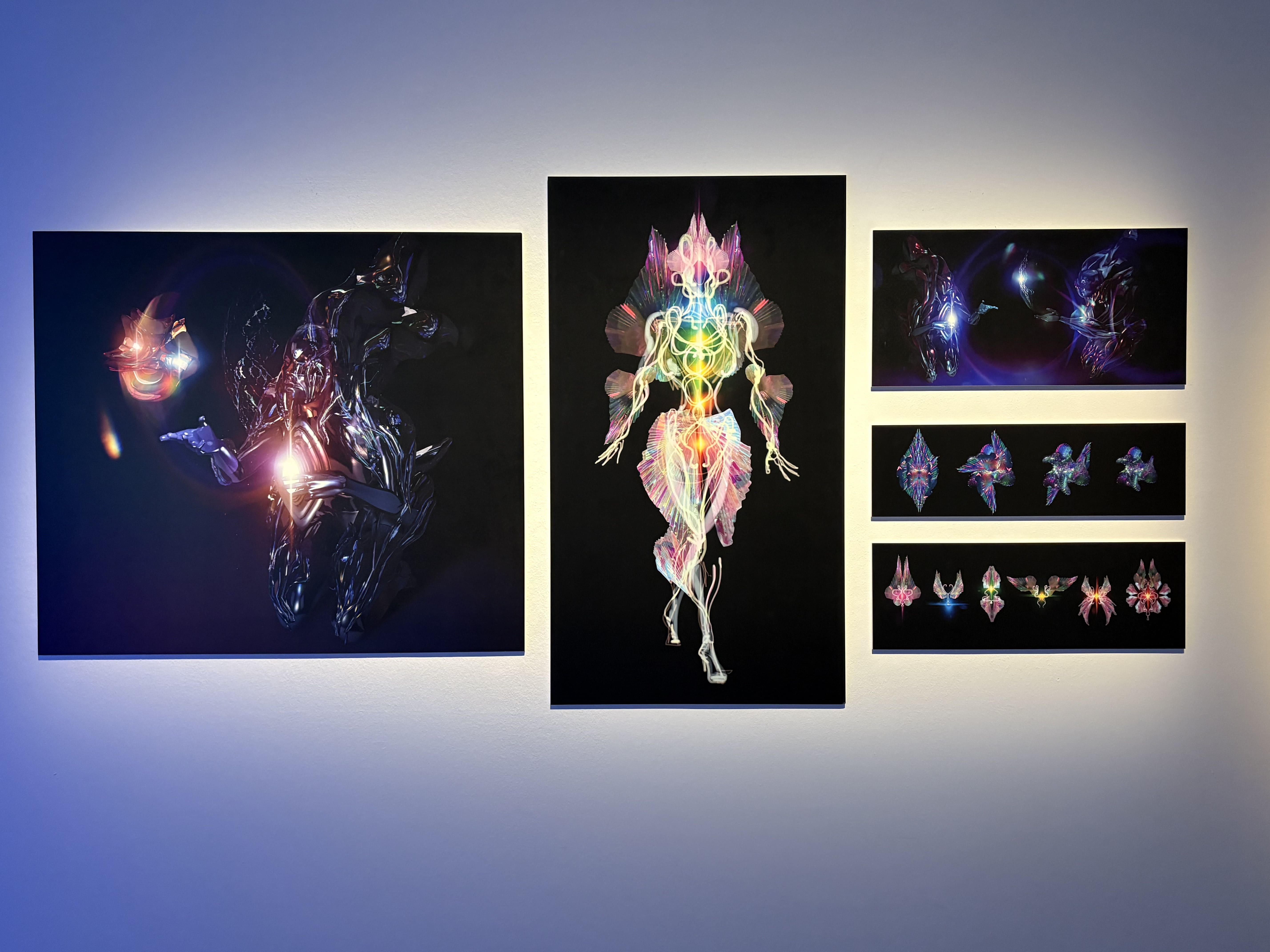
This room questioned what it means for something to be natural and suggested that anything can become natural once it is integrated into our environment. It raised ideas about coexistence rather than opposition.
Youth Empowerment
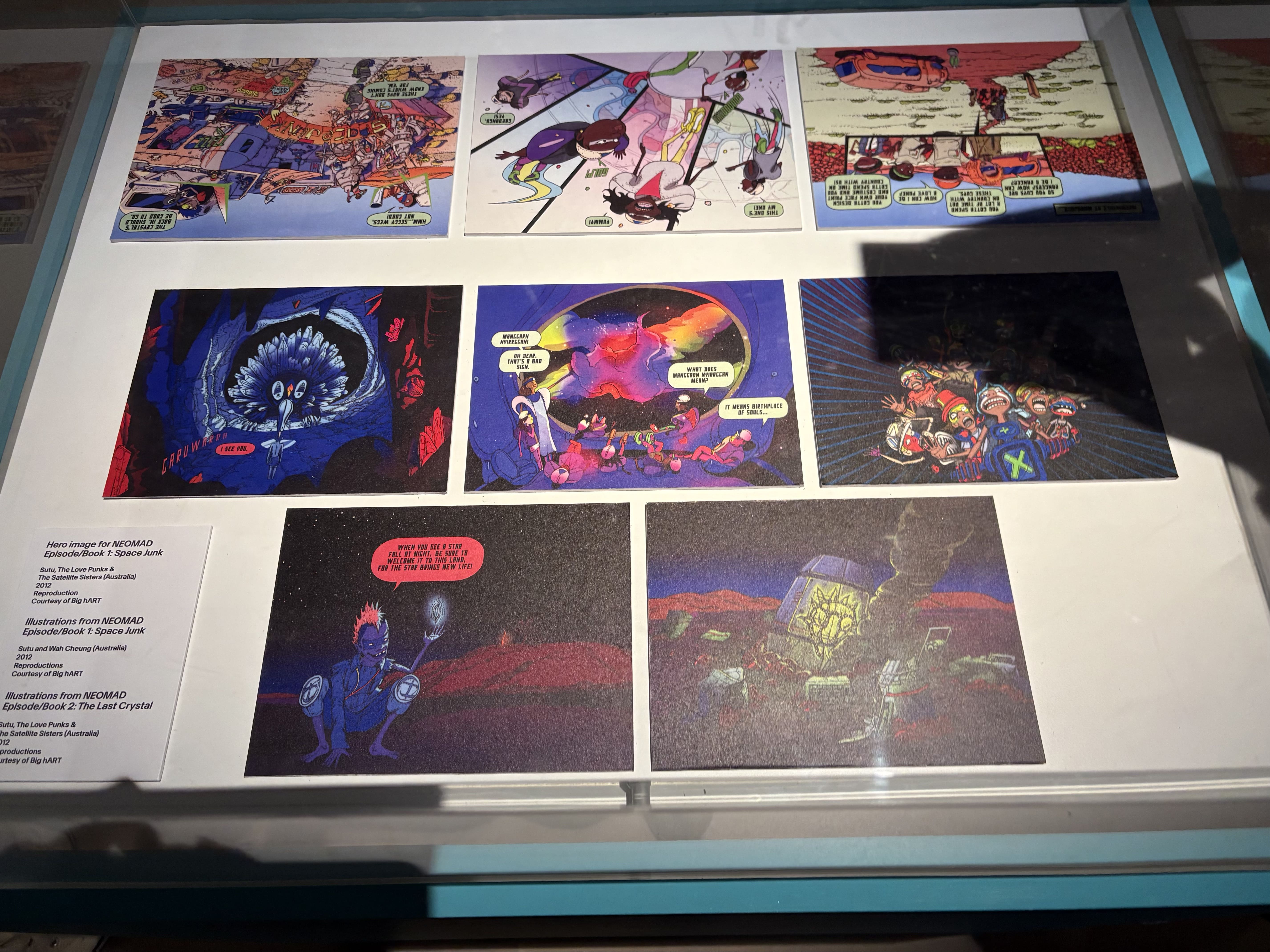
The left side of the exhibit showcased how art can empower youths through a graphic novel. It demonstrated that these communities have something to say and highlighted the importance of supporting them so they can move forward with confidence.
Afrofuturism
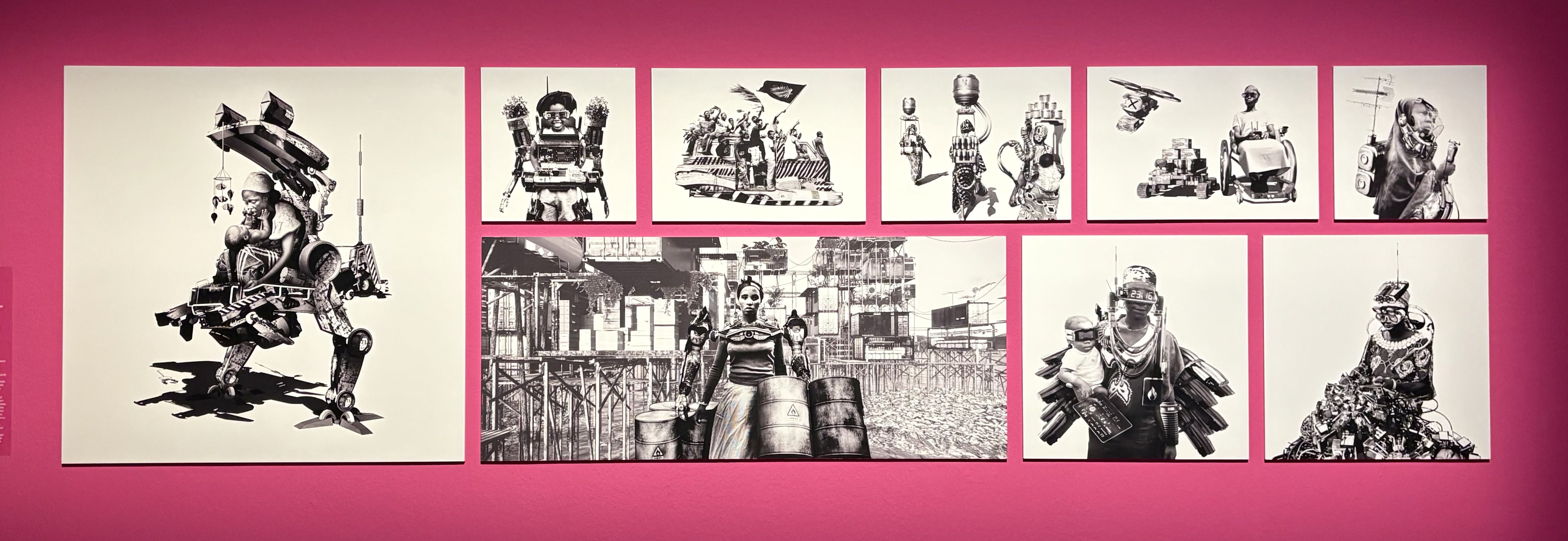
Afrofuturism was another theme explored in the exhibit. It is important for people whose voices have never been heard, as it allows them to regain agency and identity. This section used music and cultural references to challenge dominant narratives about who gets to imagine the future. It also subverted tropes, particularly the recurring portrayal of men as warriors.
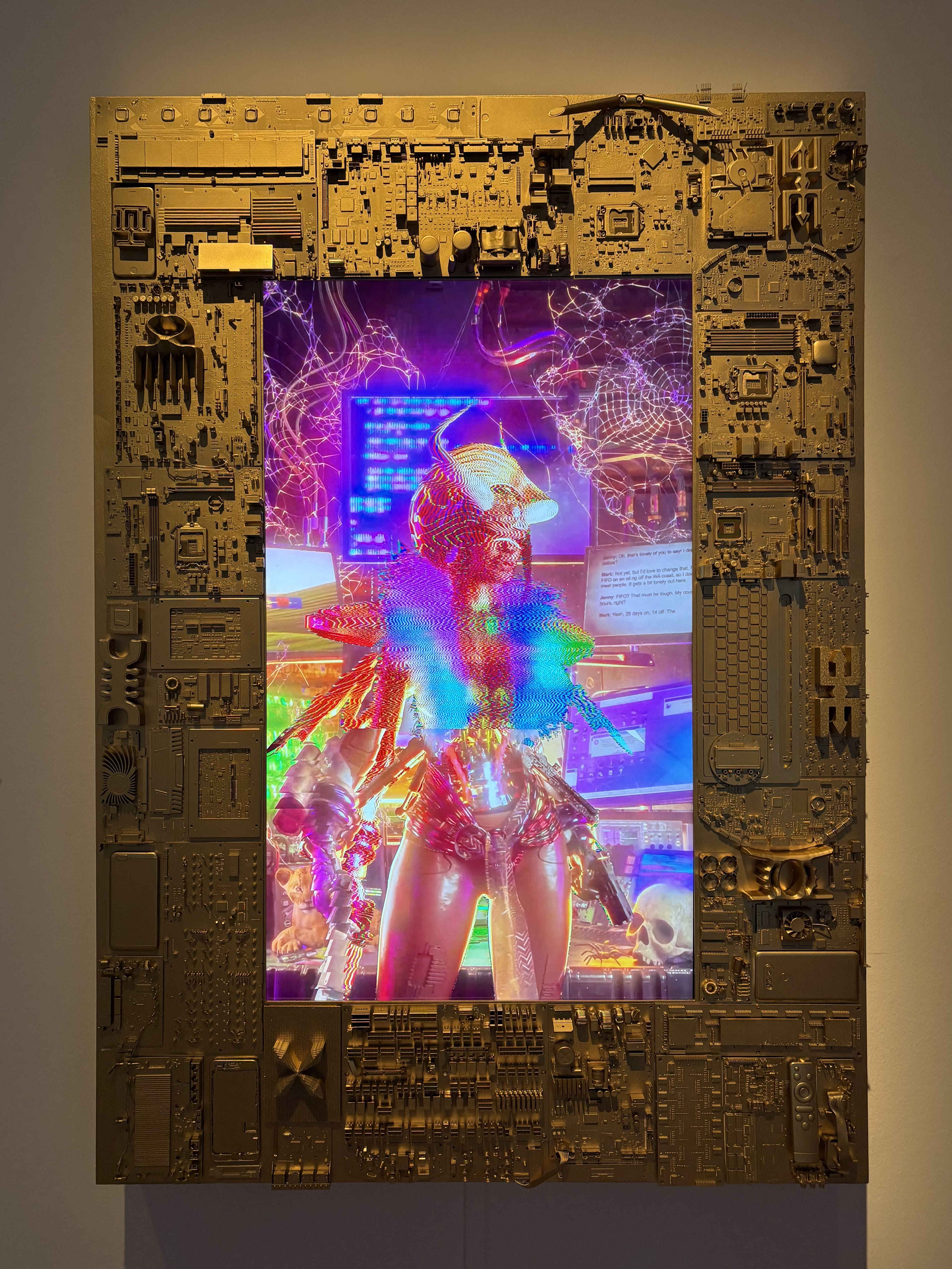
Punk Spaces
The exhibit also explored punk spaces such as Island Punk, Silk Punk, and Spice Punk. It questioned what would happen if we used certain materials to build these spaces and referenced Ken Liu’s Dandelion Dynasty, which combines heritage with punk futuristic themes. This section encouraged us to think about how we view the future through a science fiction lens.
There was a section about fashion as an expression of identity and futurism. It showed how clothing can represent both cultural memory and future aspirations.
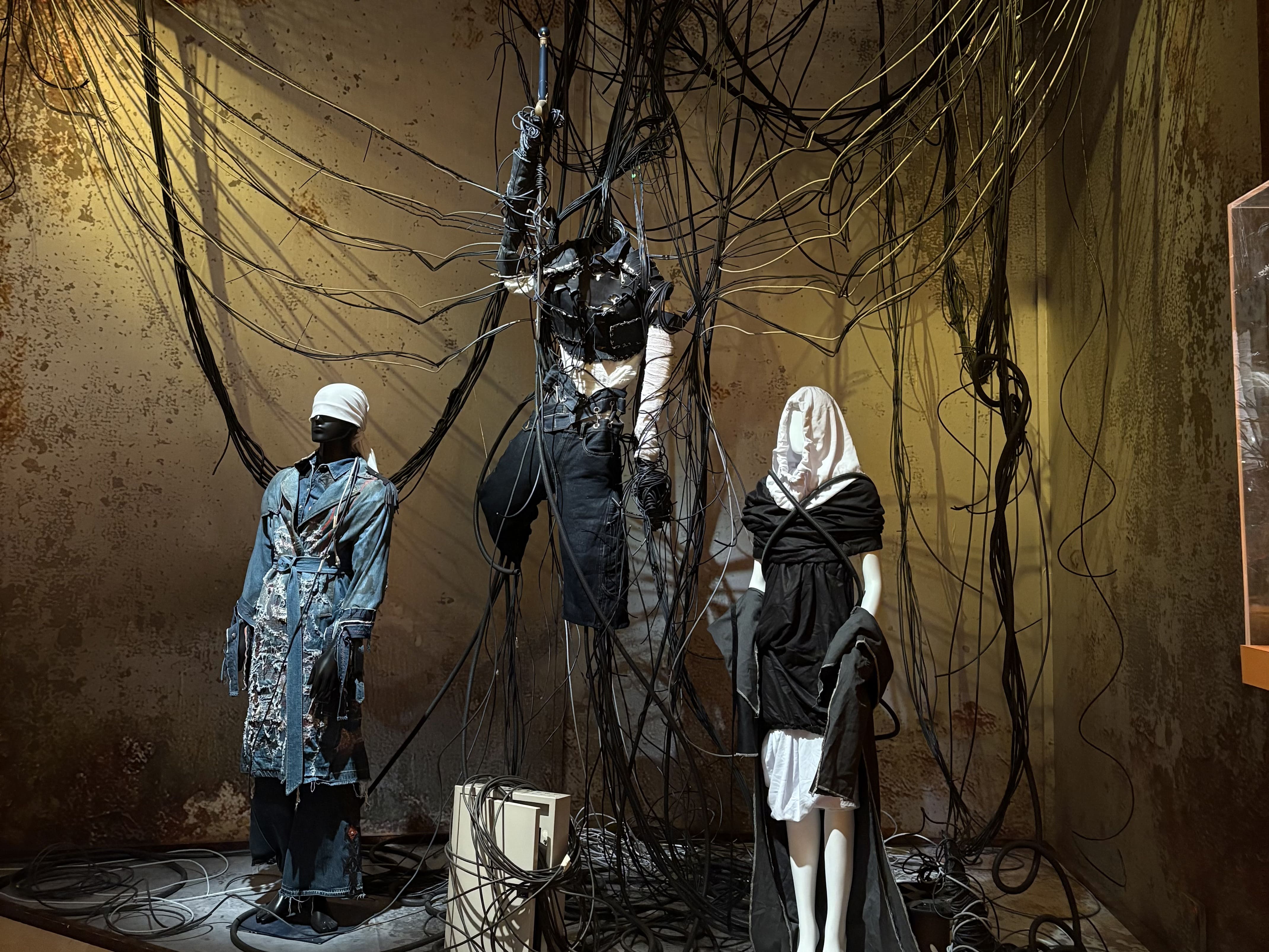
AI and Heritage
Another part of the exhibit displayed AI writing scriptures used by monks, Our tour guide told us about was a couple of visitors who told her that they couldn't take pictures because it is disrespectful to their culture, which is interesting to me considering these scriptures can't be read anymore, and to me the scriptures lose even more meaning when this AI is just producing interations based off what it is fed. Is this sacriligious?
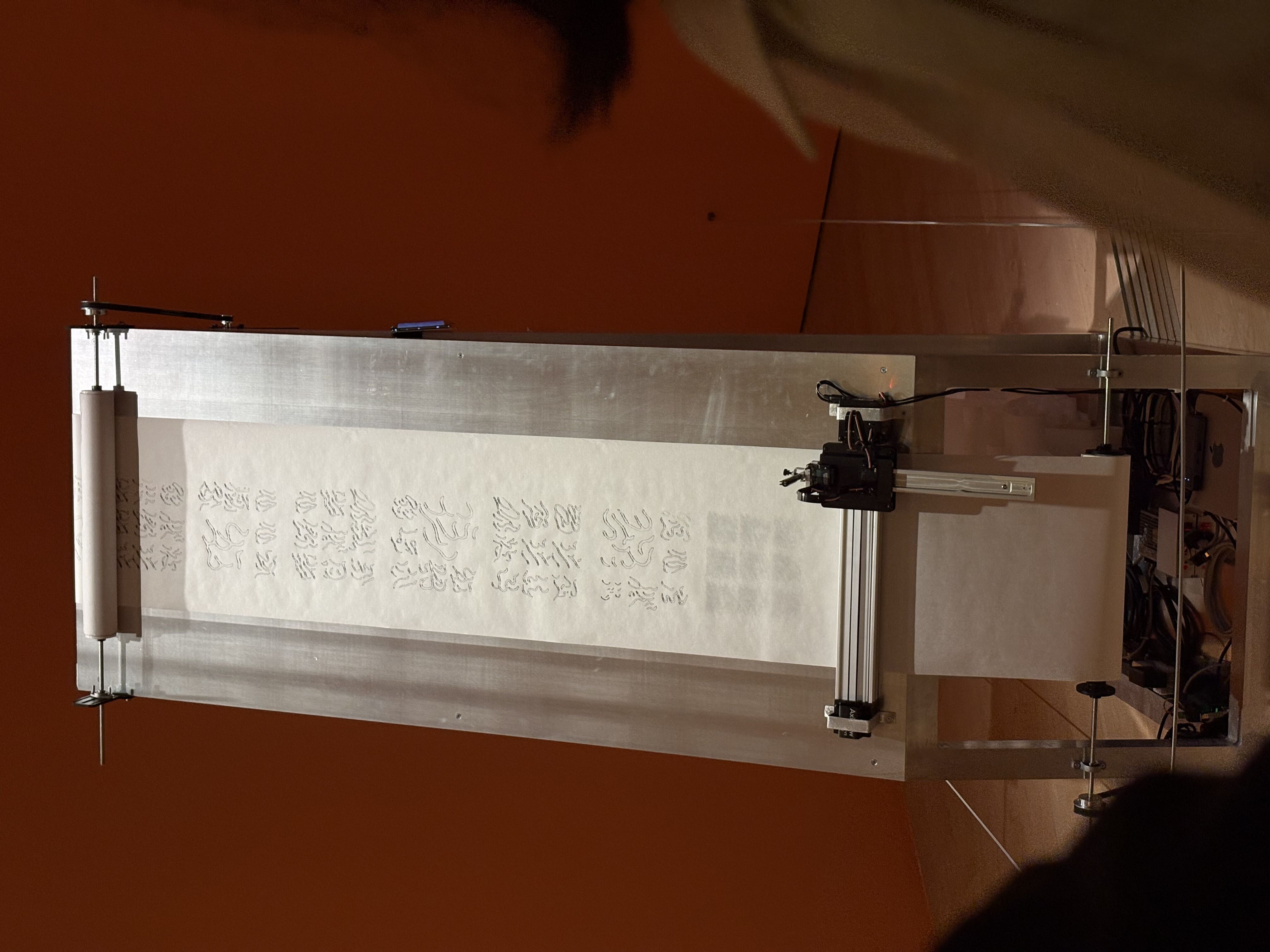
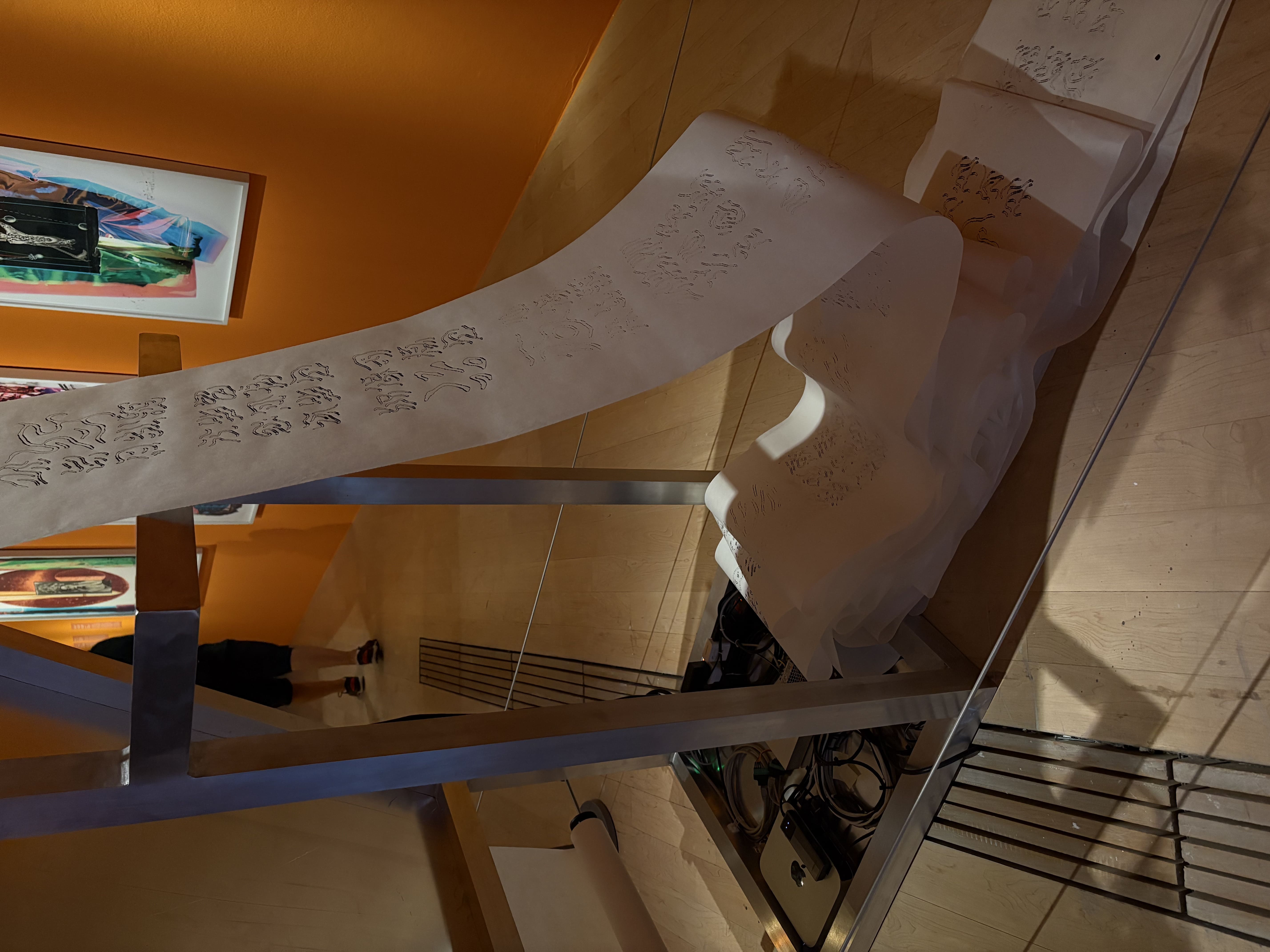
Video Games
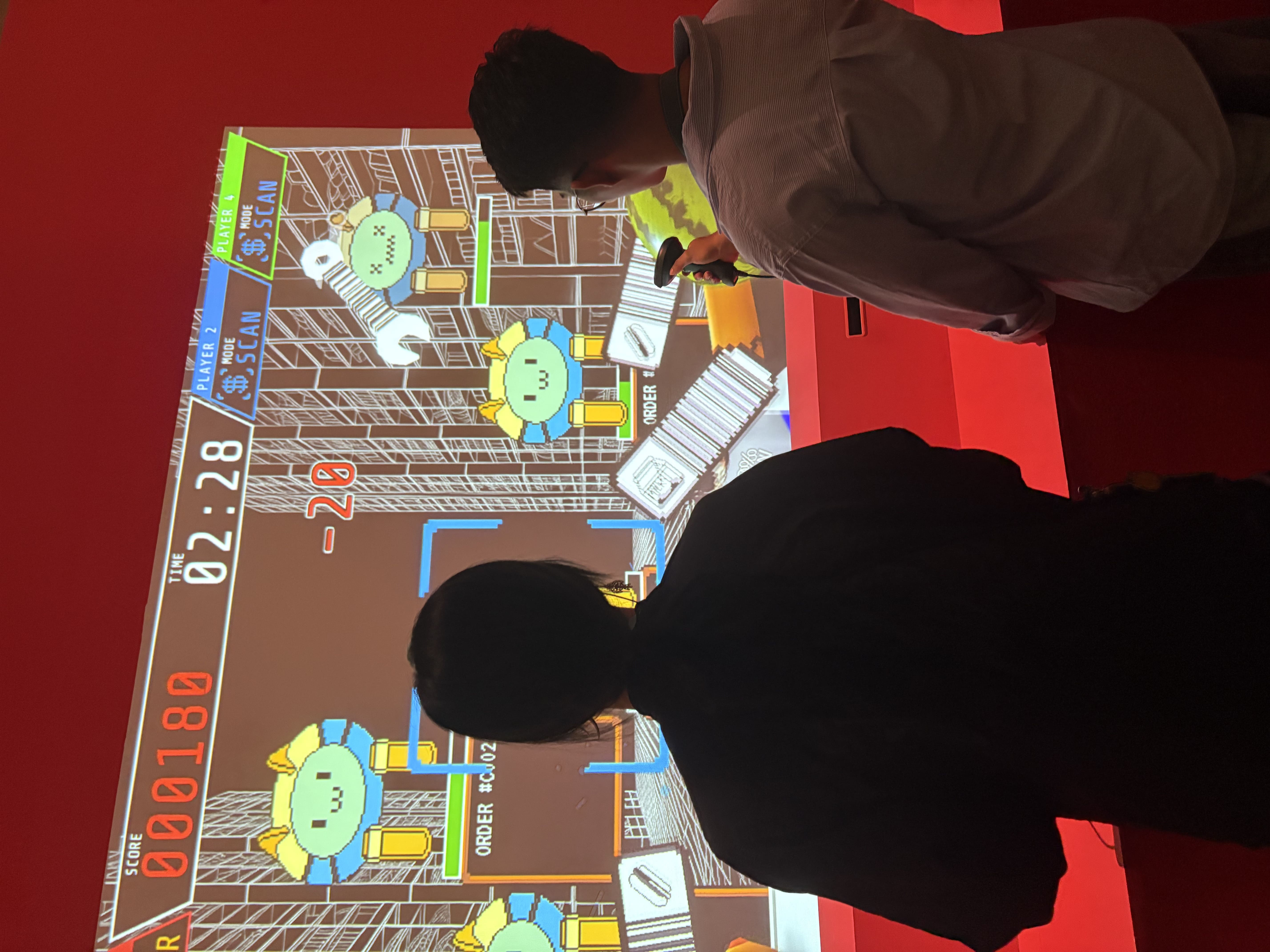
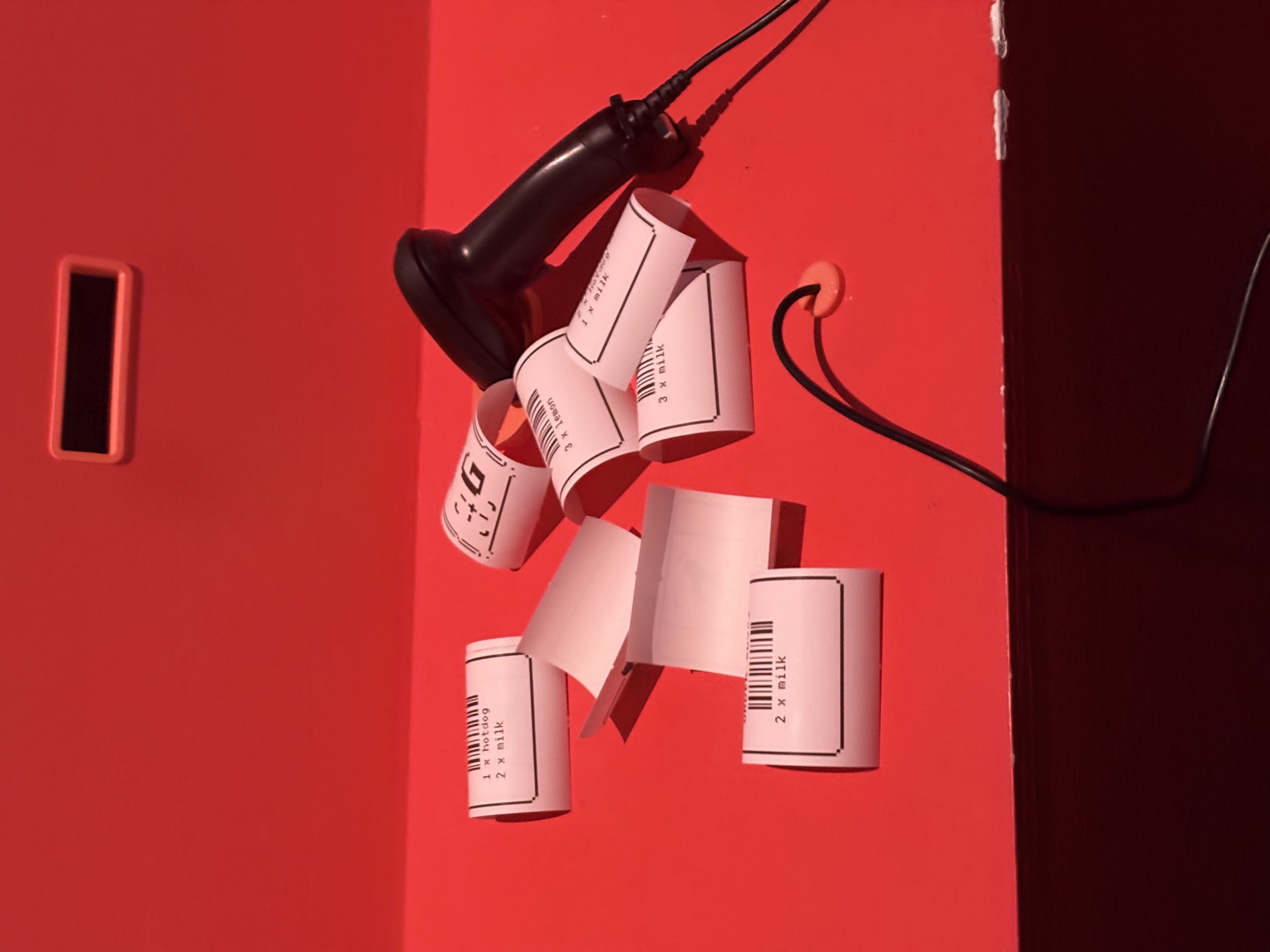
The exhibit also explored video games and how they make interactions more tactile. These games revolve around the player, allowing us to see different dimensions of a world and experience a narrative directly. It initially felt like technology was destroying heritage, but the exhibit suggested that it is actually about finding a way for them to coexist.
Extra Notes
A recurring question in my mind was why are we so drawn to dystopian narratives? While there were also utopian depictions, I felt the dystopian ones had more initial pull to them. Maybe it's because these dystopian depictions act as warnings and reflections of our anxieties about technology, nature, and society, so has more of an impression in our minds.
I learned that rewilding is a term used to describe how nature can take on multiple alternate forms. The exhibit also featured a soundscape called the "Workers’ Song", which originally was a dark song used to push people to build things. However, in this exhibit, it was repurposed as something positive, using sound to bring communities together to heal the world. At the end of the exhibit, there was a transition into a brighter space, suggesting hope.
Reflection Questions!
1. How is the exhibition curated and designed, what story is it telling?
The exhibit is curated in such a way that displays multiple views and perspectives of how we might depict the future. It goes through different points in time, showing existing views in older movies and games, to newer perspectives and applications on how we might shape tomorrow.
2. What are the design decision that you notice in this exhibition?
Something I noticed was how some rooms back to back contrast each other, for example the first couple rooms show more dystopian ideations of the future, where the worlds are more bleak and obsolete, whereas the 3rd and 4th room about Afrofuturism and Tamil Futures shows this use of technology in a more utopian light as a way of empowerment. There is a nice balance of views and a reminder that the future is what you make of it.
3. What are some of the outstanding artefacts for you? Why?
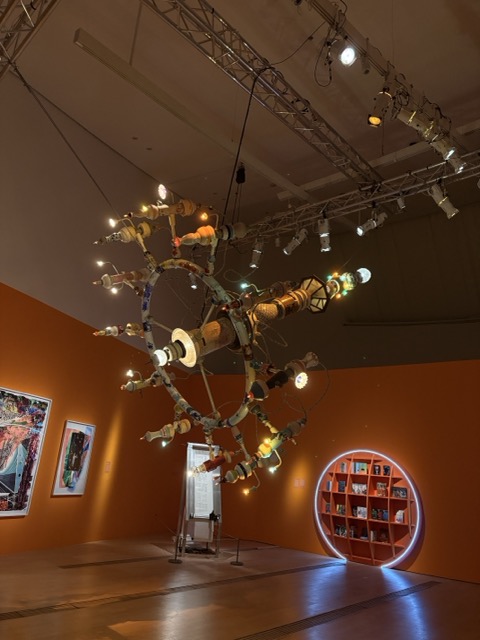
The one that caught my attention the most would be the giant satellite installation made out
of Chinese heritage porcelain. Firstly it is visually very attractive and looks very
intricate to make. The porcelain used also gives it a very delicate feel to it, especially
knowing how fragile it is. That makes it kind of ironic to make spaceships and satellites
out of since they have to be strong to withstand the journey to space.
It’s a nice symbolism! While porcelain is fragile by nature, it's like saying the
preservation of memory and heritage will always be strong enough to see the future.
4. What can be learned from the exhibition in relation to your own work?
Something that I feel I should put more care into my work is creating the narrative it sits in, as a way to give my outcomes more context and make them more relatable to those who see it for the first time. I should also consider the setting I see my work in, for example some of the videos in the exhibit were in a closed off room so you were surrounded by the sound and visuals, and some were paired with physical artefacts.
5. The context of the exhibition is the future, how is the future portrait? (in your own words)
It’s very vast. The exhibition showed the future in so many lights, some good and some bad, and the outcome of which was ultimately dependent on how we used technology to get there. Because of this, this exhibit is a good opportunity for everyone to think about the kind of future they want, and consider how their use of technology will play a role in that.