Critical Journal Seminar
Today’s crit study lecture focused on how our dissertation at the undergrad level should
aim to inform, expand, or challenge our own knowledge rather than just summarise things
we already know. We talked about the idea of making as research and how research can
take many different forms. It could be something as simple as creating observations
through drawing, or as complex as prototyping. Even unconventional methods like
unmaking, hacking, or deconstructing can be part of it.
We also discussed contextualising our research and making. Think about what theories or
social contexts our work sits in, and which artists or designers share similar thought
processes. User research can also come in here, including both user perspectives and
expert opinions.
Reflection is another key part. Self-reflection helps you understand what worked and
what didn’t, but testing prototypes and getting feedback from others, like in focus
groups or critiques, can give a broader perspective. We also went through different
methods of analysis, such as visual or formal analysis, artefact analysis,
classification, and categorisation.
Another important point was documentation. We need to choose the best way to document
our research to support what we’re exploring. This could include technical plans,
photographs, or written documentation.
Note that all these steps can happen at the same time and overlap. It’s not a strict
process but something more fluid. We’re able to write in the first person and include
external examples, like writers, philosophers, or artists, to support our ideas. One
thing to keep in mind is that our dissertation will be submitted before the grad
project, so there’s a clear cut-off point for where the research ends.
-
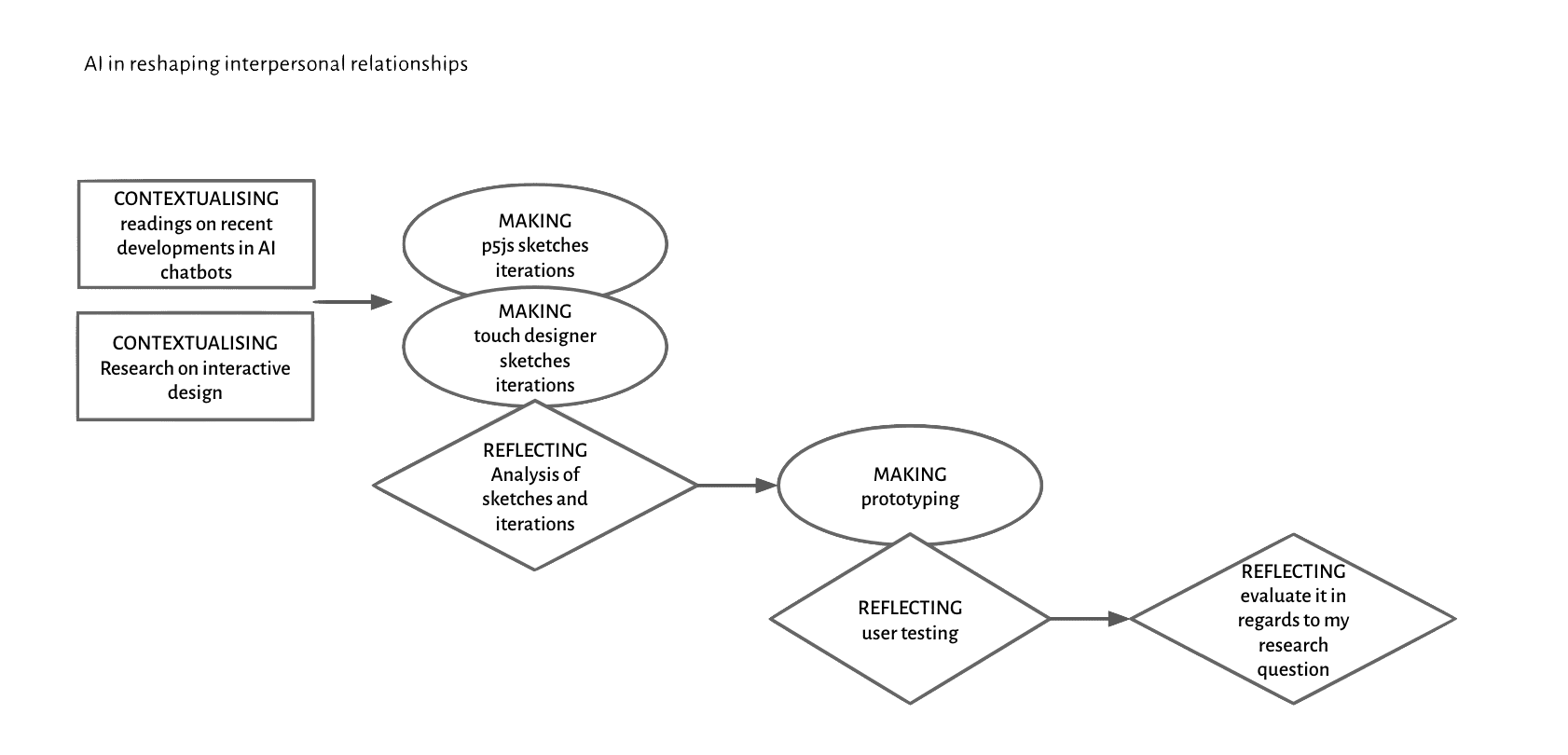
Crit Journal Research Plan First idea of the research plan flow
Reflecting on the Plan!
For the flow of my research map, I went with the most logical structure that made sense
to
me. Starting with the context, I will to explore how AI is currently being used in
everyday
life, finding case studies that align with my interests address the issue I want to
address.
From there, I will start making! Prototyping different ideas and concepts that I have in
mind, testing them out and reflecting on what works and what doesn’t. This is all stage
one.
The next stage to me would be to finalise one idea that I think has the most potential
and refine it to get others to be able to interact with it. This would involve user
testing and getting feedback from others to see how they respond to the idea.
This would involve relfection from both myself and others, maybe using feedback forms or
surveys to gather insights. Finally, I would document the whole process, including the
research, making, testing, and reflections, to create a comprehensive record of my
project!
Mindmapping Session
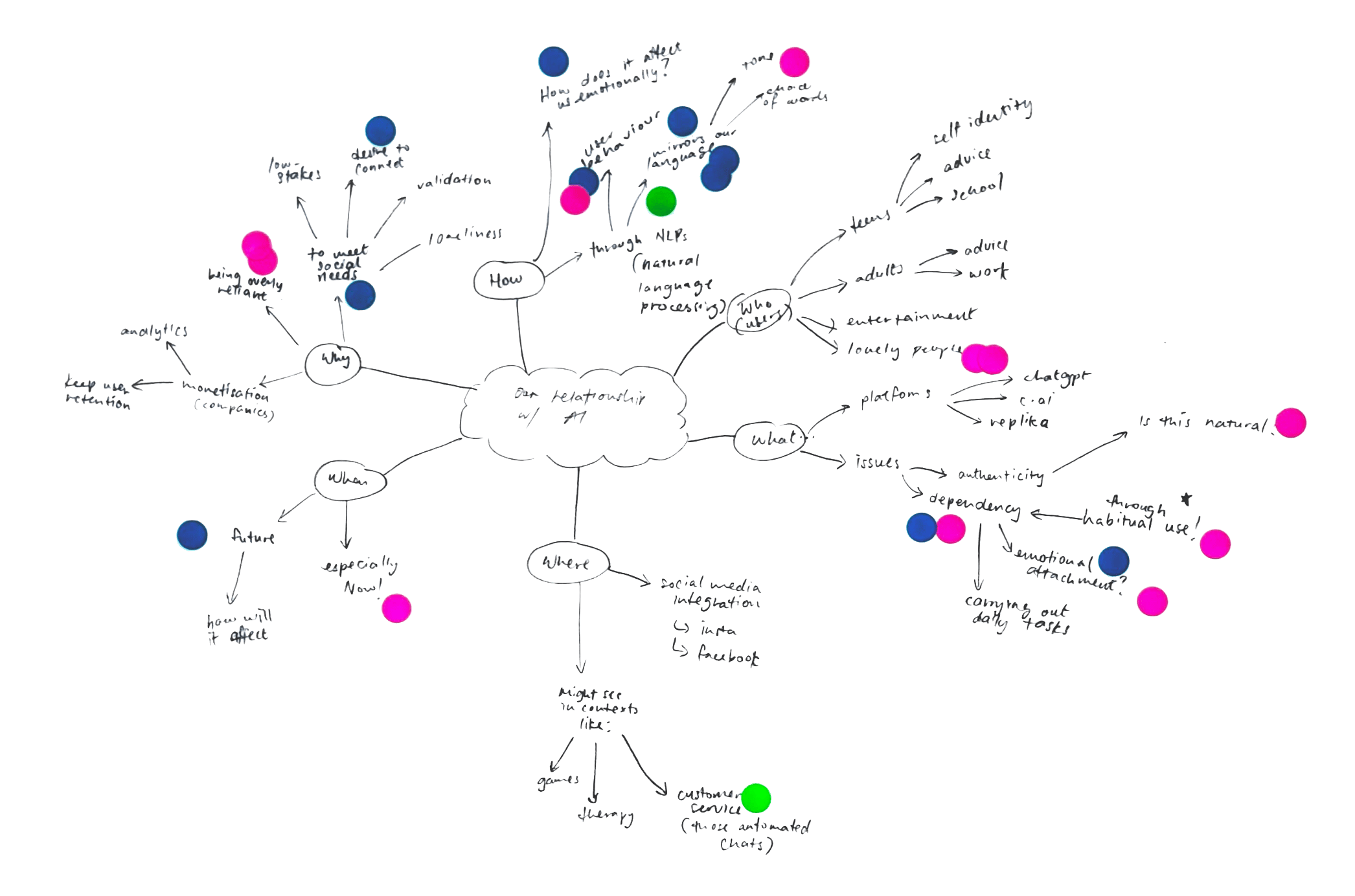
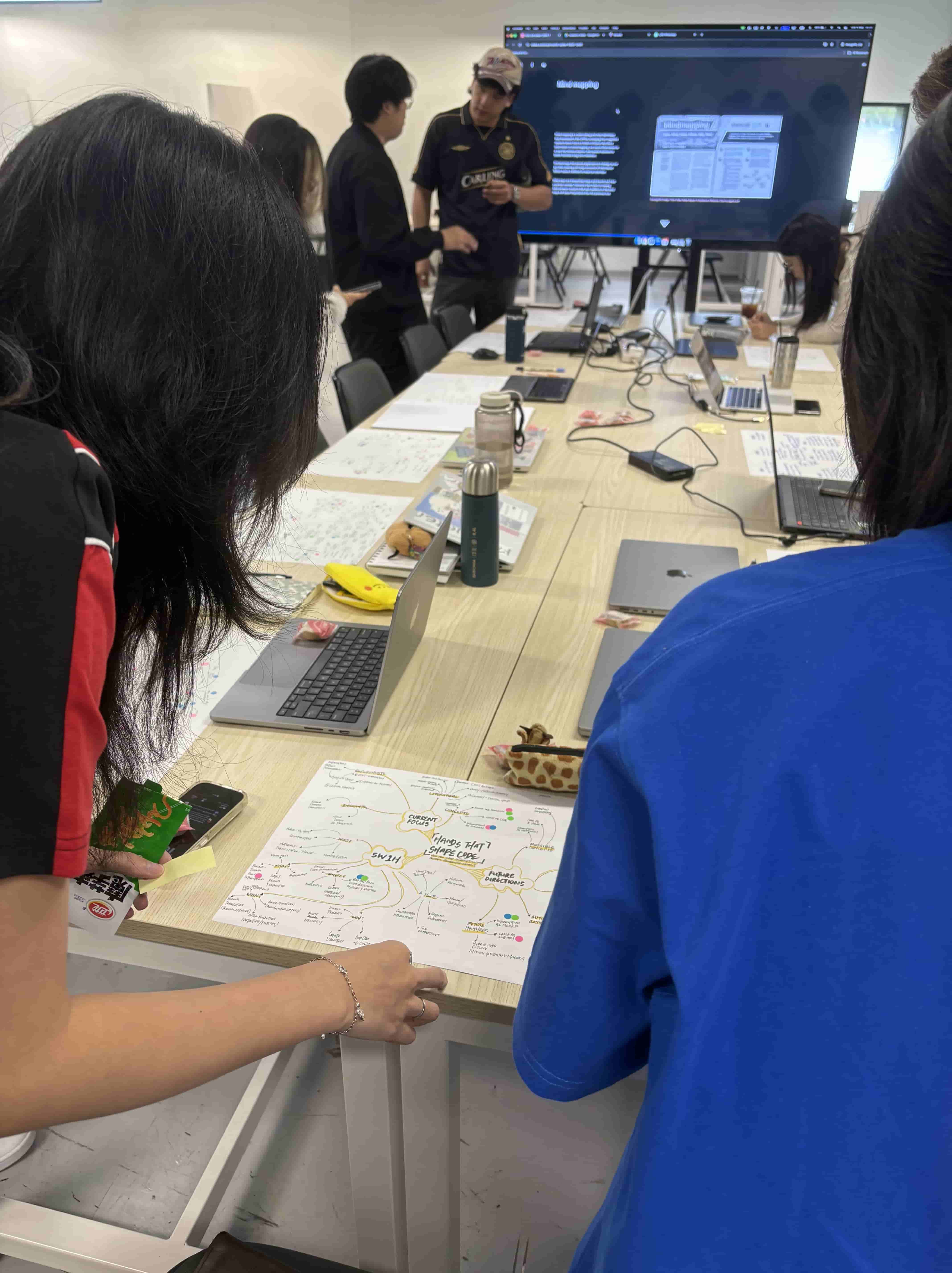
Today, we all took some time to make a mind map of all our ideas and any findings we have on our topic. At this point, since I’m still in a pretty early stage of my idea development, this was a good exercise to flesh out my ideas and to see what works and what doesn’t.
We were told to give each idea a few minutes. If it doesn’t work, maybe it wasn’t a
strong idea, but if it flows naturally, then keep going. It’s about translating your
thinking through making. In the beginning, it’s fine to make a lot just to explore
what works, but once you settle on an idea, iteration shouldn’t be the main focus
anymore.
Through this exercise I found it was really important that I ask myself what I like
or dislike about what I made, what works and what doesn’t, and reflect on that for
the next iteration. The goal is to find a good
balance between craft and thinking.
We were introduced to the Iceberg Model as a way to think about research, where it
starts from the general context and then digs deeper into what lies beneath. Through
reading case studies and identifying recurring themes or structures, we can uncover
the assumptions people make or the worldviews that shape behaviour. From those
assumptions, we can start solving real problems.
We’re also encouraged to form research questions and work with themes/ three main
pillars, each linked to a piece of literature. Personally, I’m interested in how
computational tools can be integrated into design in more creative and artistic
ways. It’s not about competition but about celebrating creative uses of code and
sharing ideas that make the world better.
Reflection
While mind mapping, I tried to keep everything methodical and organised. I started by
following the suggested structure of using the 4Ws (Who, What, Where, When) and How to
guide my thoughts.
Something I realised I do is that I keep everthing very broad and generalised. For
example, I explore quite a few aspects of our evolving relationship with AI such as our
overdependency, habitual use of it and building connections with it. While I thought I
was keeping it pretty direct, I unknowingly keep my options broad because it's a bit
scary sometimes to think I am committing to a strict path. Moving forward, I think it
would be beneficial to narrow down these categories to make my research more focused and
targeted.
There was also a reminder to believe in your own work and think about who will benefit
from it. Our projects shouldn’t just be self-expressive but should also have an impact
on the community or bring about some positive change. It’s not just about completing
tasks but creating something that has that “wow” factor.
Uncertainty is a big part of the process, so I’m learning not to think too
transactionally and just keep doing. We also talked about mind mapping and how it’s okay
if things don’t work out. It’s more important to remove what’s no longer relevant and
keep refining the direction.
Mindmap Findings
Once we all had our mind maps, we went around reading other people’s mind maps and
placing stickers on the ideas that we thought were the most interesting!
On my mind map, the topic with the most stickers were . . .
🥇 Over-dependence
🥈 User behaviour
🥉 AI to meet social needs.
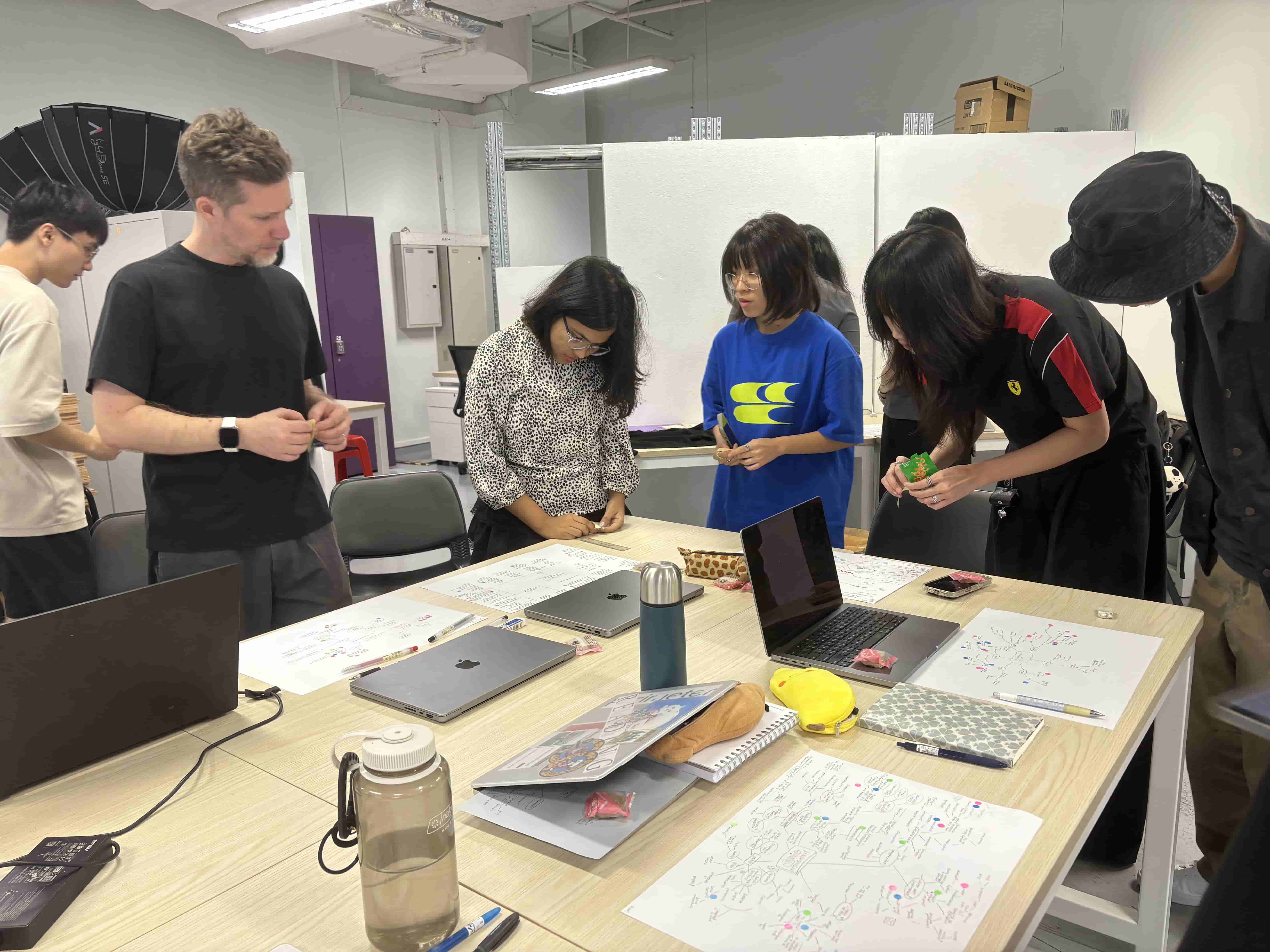
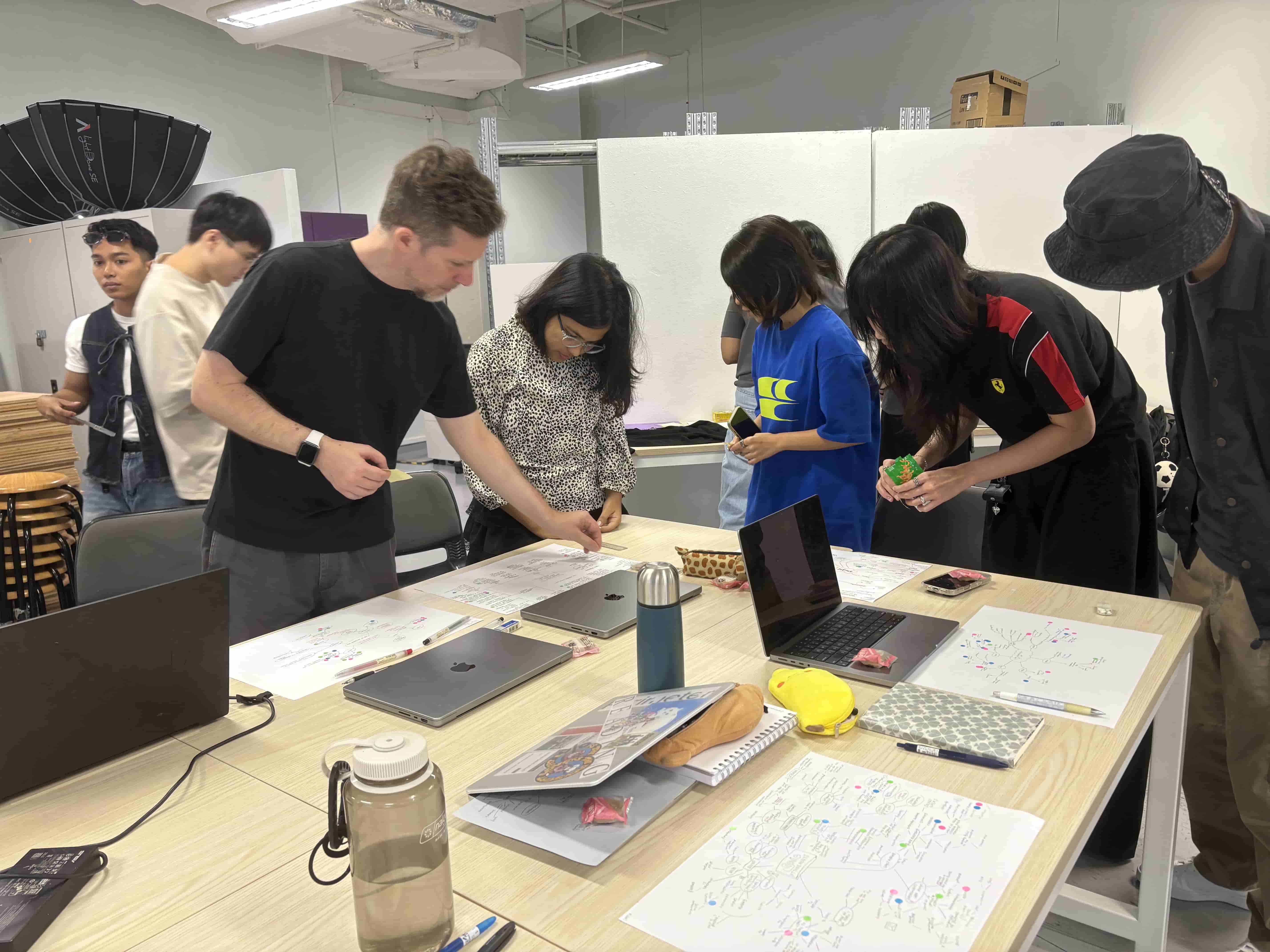
Sharing Session Everyone taking a moment to look through and add stickers on the ideas they thought were the most interesting!
Doing this exercise was good for me as I always have a hard time when starting out with a project. There are always too many ideas and because they can all somehow be related, it makes it very hard to narrow down. This exercise let me see what would be the most interesting to both myself and those around me. It shows that the people around me are concerned about becoming over-dependent on these AI systems themselves.
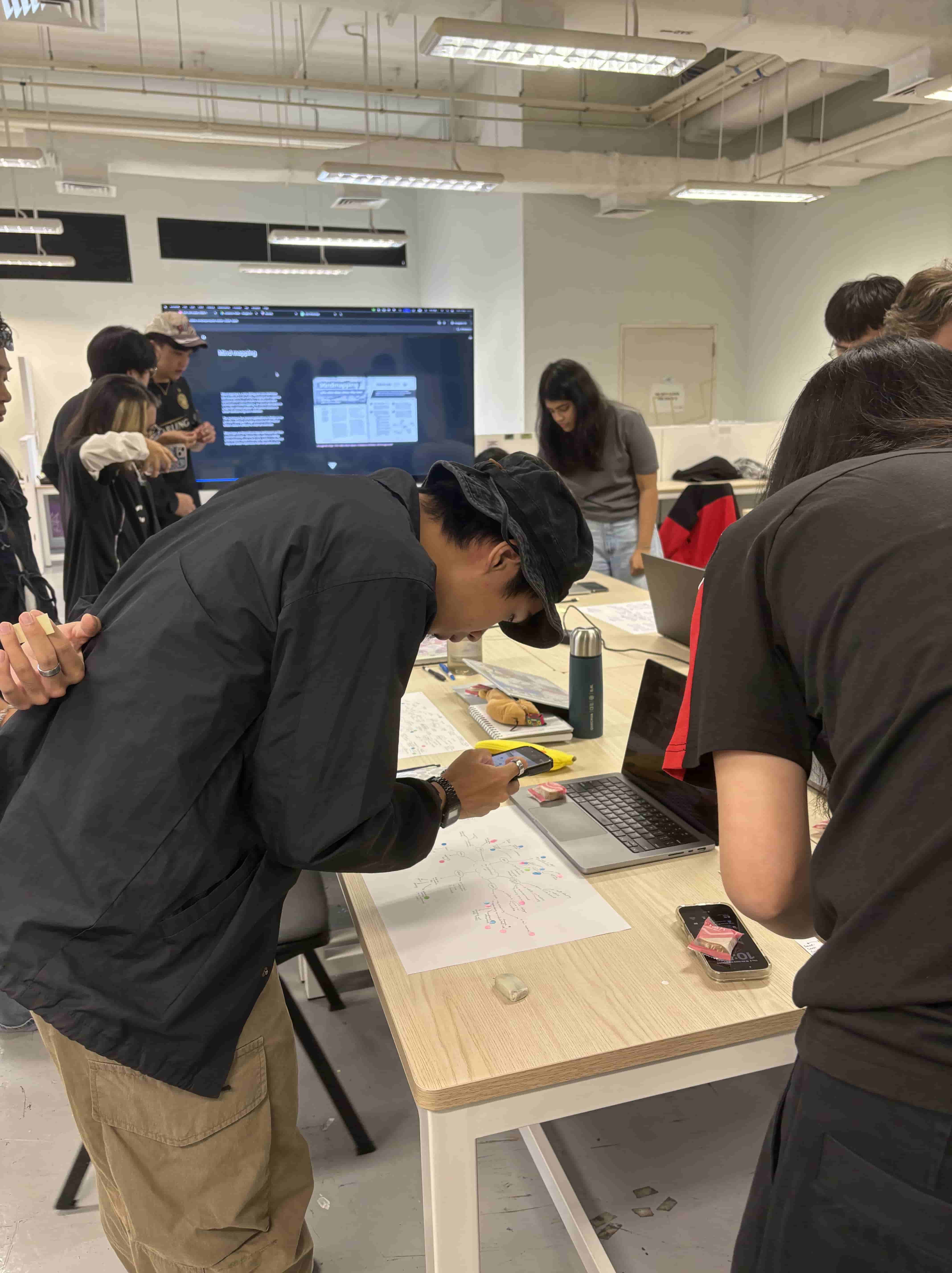
Resources to check out!
can store different versions of what you’re developing on GitHub