Week 2
Realigning my Making
Since my last consultation, I worked on making some diagrams and sketching out concepts for my making. I took the first idea I had and ran with it. My question was: How can I embody closeness with AI?

Starting off with a pretty simple idea, I drew from toys that people interact with, such as Tamagotchis and Furbys. There is a sense of closeness between the toy and the user that comes from prolonged and repetitive interaction. What I think would make it more unsettling is if these toys could sense you first, instead of having to be probed.
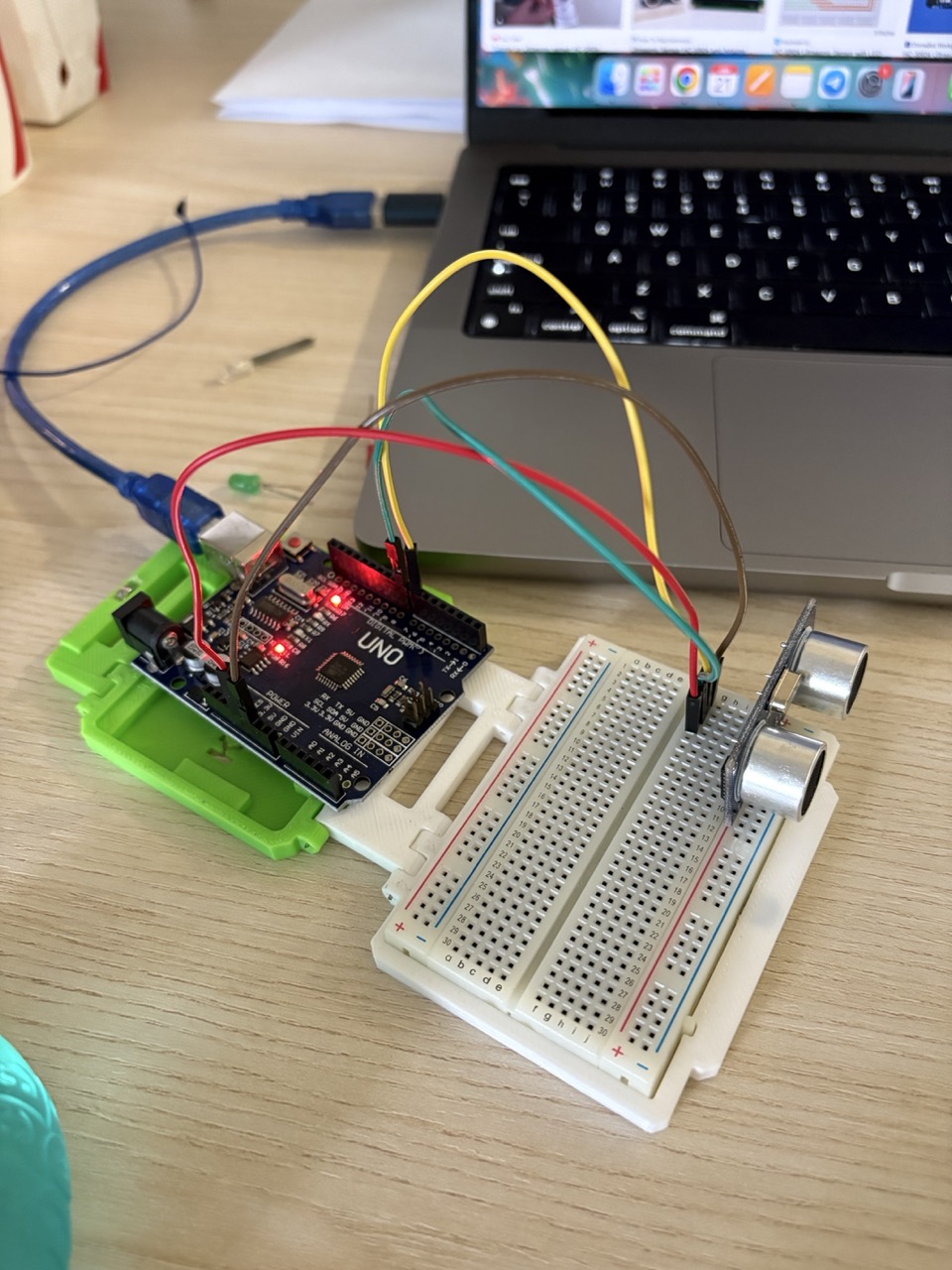
I decided to try using an ultrasonic distance sensor to achieve this. I thought of covering the Arduino with the “skin” of a toy, leaving space for the sensor underneath its head. The closer the user is to the sensor, the brighter an LED pin will glow. It’s a simple concept for now. The light indicates that the system senses the user. Though I do realise this is a bit too simplistic to indicate closeness right now, the sensor could also be used to trigger other factors like different sounds.
A problem I faced while coming up with this concept was using the toy as a skin. Toys and play already have a lot of psychology behind them, so I was worried it would water down the topic and shift the focus more towards toys.
What I do like from the idea, however, is the use of sensing. With AI usage becoming so normalised, we don’t really question how much the system knows about us. The more we use it, the more our behaviour is being observed and learned from. When presented more directly, this can feel quite eerie. This is what led me to my next idea for replacing the toy skin. To keep it more centred on technology, I thought of using TFT screens.
Visuals could include keywords that get picked up, distorted versions or silhouettes of the user on the screen, or even images of conversations the way the AI “sees” them. I want to show that it is merely a reflection of the self that is being perceived in AI usage, especially when it comes to more intimate interactions. This way, I can also utilise some components I made last semester, just reworking them to fit my new vision.
Grad Project Consultation
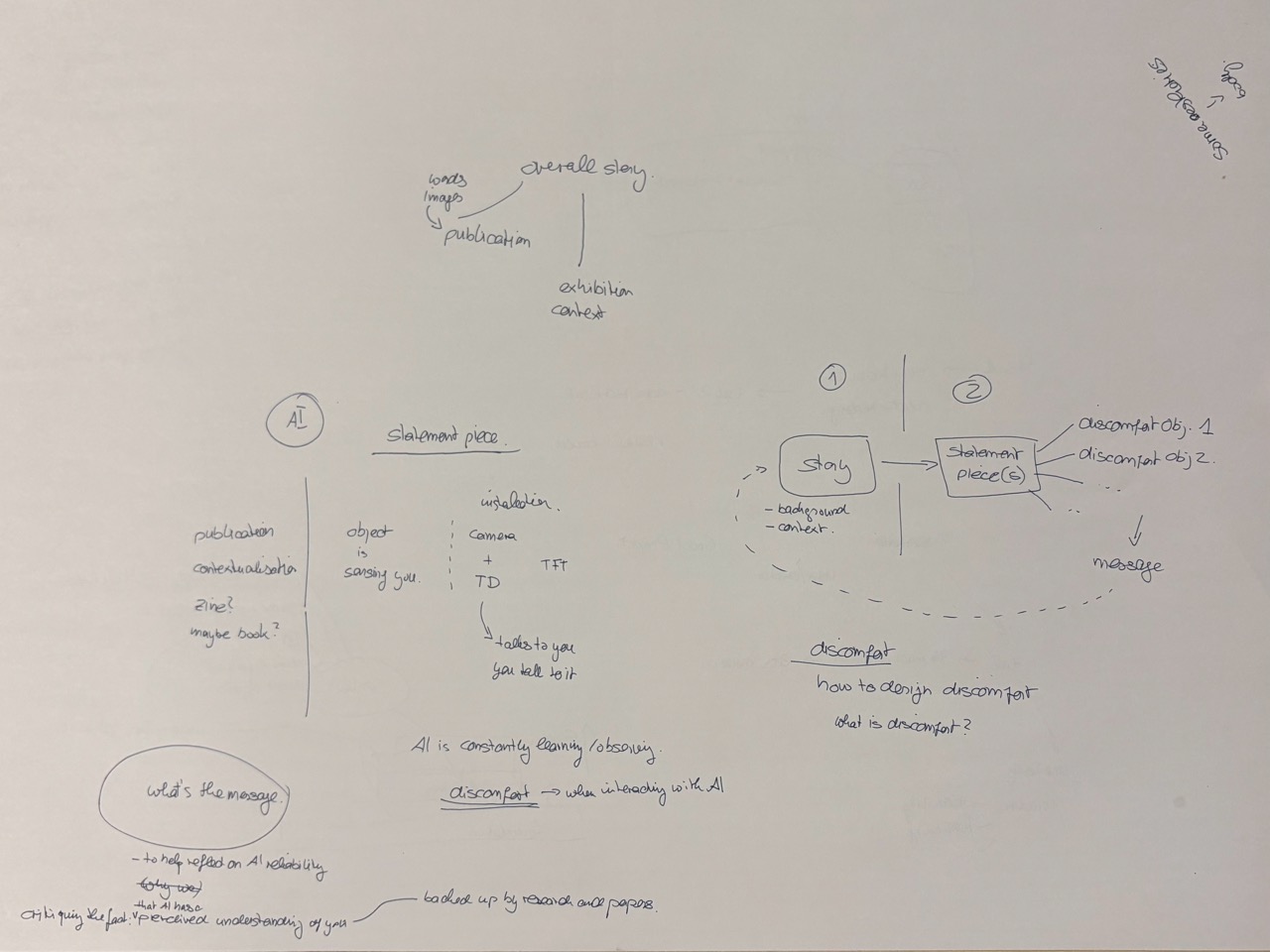
In my opinion, this consultation was a productive conversation. Not only was I getting my idea fleshed out, but we could also start to see a bit of a narrative forming.
During my discussion with Andreas, one thing we went over was that discomfort is something I’m interested in expressing, and it would be interesting to explore how to design discomfort. This led him to show me a past student’s work that my experiment reminded him of. It was a very peculiar, creature-like object called Earl.
While Earl’s behaviours were quite simple, its appearance was very intriguing. In the documentation, there was a lot of interaction between Earl and the people around it. Even slight movements were enough to draw people in and make them want to interact with it. This is something I liked about Earl. Even though it is simple, there is something very curious about it. Maybe it comes from its furry exterior, so I’ll need to think more about how I want the appearance of my artefacts to look.
Something else I needed to consider was having supporting artefacts alongside my statement piece. It’s very easy for the meaning to be interpreted differently from how I intend. If I want to rely on just one artefact, it would need to convey a very specific meaning that is clearly tied to the topic.